
More actions
| Line 360: | Line 360: | ||
Finally, the player will see a gigantic leap in damage performance reaching the ability to field Tech II drones. This really should be the players first concern, no matter the play style. Finally these are only two of the most common fits and play styles. With each of these styles, the player should be aware that Hybrid guns use capacitor energy to fire. If the capacitor is empty, you can not fire your guns! Drones will continue to function regardless. Shields and shield modules play a roll in the capacitor usage and amount; when fitting a shield tank, take into consideration the use of Hybrid weapons and their effect on the capacitor. An empty cap can neither power shields nor fire guns. <br /> | Finally, the player will see a gigantic leap in damage performance reaching the ability to field Tech II drones. This really should be the players first concern, no matter the play style. Finally these are only two of the most common fits and play styles. With each of these styles, the player should be aware that Hybrid guns use capacitor energy to fire. If the capacitor is empty, you can not fire your guns! Drones will continue to function regardless. Shields and shield modules play a roll in the capacitor usage and amount; when fitting a shield tank, take into consideration the use of Hybrid weapons and their effect on the capacitor. An empty cap can neither power shields nor fire guns. <br /> | ||
==== The Neut Tristan ==== | |||
The Neut Tristan is a particularity deadly version of the Tristan that has been made viable once again with the recent changes to energy neutralizers. It requires fairly advanced fitting skills to fly. A compact afterburner may be fit and a powergrid/CPU implant may be used to alleviate some of these fitting issues. Capacitor management is also a major issue with this fit, as it will fully deplete in approximately 20 seconds with all modules running with max skills. The neut Tristan pilot must constantly be aware of the state of his capacitor. He must use the cap booster while turning other modules on/off at appropriate times while reacting to the tactical situation at hand to make this fit live up to its full potential. If the pilot manages all of this successfully, he will be able to bring down nearly any T1 frigate encountered with relative ease. <br /> | |||
This fit is optimized for solo engagements in low-sec faction warfare complexes. It's power diminishes rapidly as more enemies come on grid. The tactics used by this fit are relatively simple: Apply 2 overheated cycles of all three neuts while keeping your scram and afterburner on. Inject your capacitor and turn off your middle neut. This fit is cap stable with 2 neuts running with decent skills. At this point, you should be getting close to being into armor. Apply single cycles of your repair module as needed, or perma-run the module on overheat if taking large amounts of DPS. You should generally aim to manually pilot or orbit around the target at the edge of scram range (~8km), as your neut pressure will almost always force your opponent to turn off their web/scram/point/afterburner. If the fight isn't going your way, you can often warp off immediately since the target will have a hard time keeping tackle on you. Even if some tackle is present, the opponent generally won't have enough capacitor to run his afterburner/web/scram simultaneously. This allows you to overheat your own afterburner and disengage at will. <br /> | |||
The Neut Tristan pilot should always make sure that his repair module is loaded with nanite paste before undocking and carry 16 to 24 extra units of paste in his cargo hold. Make sure that auto-reload is turned off for your repair module. Make sure that your cap booster is loaded and that the remaining cargo space is filled to capacity with spare cap booster charges. <br /> | |||
Additional reading: [[Armour Tanking]], [[Shield Tanking]], [[Drones]], [[Turrets]] | Additional reading: [[Armour Tanking]], [[Shield Tanking]], [[Drones]], [[Turrets]] | ||
Revision as of 02:52, 26 February 2016

RELATED UNI-WIKI REFERENCES
|
Development SHIP BONUSES
Gallente Frigate bonuses (per skill level):
Ship Attributes
|



Summary
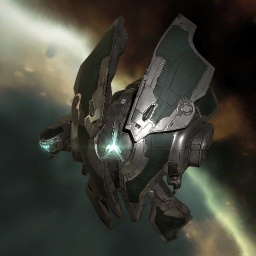
The Tristan is a Gallente combat frigate and the earliest ship in the line of Gallente droneboats. It has a bonus to both Hybrid Turret tracking speed and Drone hitpoints and tracking speed, which gives it obscene damage application and projection at any range. The drones are an excellent tool in both in PvP and PvE, and the Tristan is the only Tech 1 frigate that can field a full flight of 5 light combat drones.
Skills
Since the Tristan is a drone boat, you should focus on training drone skills to effectively fly it. The Tristan can field a full flight of 5 light drones. Train Drones V in order to field all 5 drones. For support skills, train Light Drone Operation V and Drone Interfacing IV to increase the damage of your drones, Drone Avionics V increase your drone control range, and Drone Durability IV increases drone hitpoints. A Racial Drone Specialisation such as Gallente Drone Specialization III is highly recommended - III is a very short train. At the moment, any will do, but Caldari will be best due their decent damage, as well as durability, maneuver and MWD-approach speed, and strong shield tank.
You may want to further increase the damage of your drones using weapon upgrades in the low-slots. The Tech 1 Drone Damage Amplifier I (T1 DDA) module requires Weapon Upgrades I and Drones I, and both to IV for the Tech 2 DDA. You can change the order in which you train these skills, however T2 Drones and Drone Damage Amplifiers (Weapon Upgrades IV) are significantly better than their T1 counterparts, and both carry no fitting overhead.
Secondly, should you be kite fitting as recommended, you will want navigation bonuses. These include the basic Navigation IV which provides a flat boost to speed on grid, a propulsion module (ie High Speed Maneuvering III for MWD), and Acceleration Control III to improve the module, and Evasive Maneuvering III to be able to turn away from the opponent. Other valuable skills for the Tristan are Hybrid Turret skills (to take advantage of the ship's tracking speed bonus), energy neutralizer skills (to fit nuets), and either a Tech II shield or a Tech II armor tank, both of which are (as with drones) significantly better than the Tech I versions.
Fitting
Hyperkitten V2

Warp Disruptor II
Medium Shield Extender II
5MN Y-T8 Compact Microwarpdrive
Nanofiber Internal Structure II
Drone Damage Amplifier II
Drone Damage Amplifier II
Small Anti-EM Screen Reinforcer I
Small Anti-Thermal Screen Reinforcer I
Small Core Defense Field Extender I
Acolyte II x5
Warrior II x3


- Contact White 0rchid if this fit is outdated
Oversize AB Kiting
Warp Disruptor II
Stasis Webifier II
10MN Y-S8 Compact Afterburner
Nanofiber Internal Structure II
Drone Damage Amplifier II
Drone Damage Amplifier II
Small Ancillary Current Router I
Small Ancillary Current Router I
Small Low Friction Nozzle Joints I
Acolyte II x5
Warrior II x3


- Contact White 0rchid if this fit is outdated
Solo Armor Brawl
Light Neutron Blaster II, Void S
Light Neutron Blaster II, Void S
J5b Phased Prototype Warp Scrambler I
X5 Prototype Engine Enervator
1MN Afterburner II
Small Ancillary Armor Repairer, Nanite Repair Paste
Drone Damage Amplifier II
Damage Control II
Small Anti-Explosive Pump I
Small Auxiliary Nano Pump I
Small Nanobot Accelerator I
Hobgoblin II x8
Nanite Repair Paste x1
Void S x1


- Contact White 0rchid if this fit is outdated
Solo HullTanked SAAR
Light Ion Blaster II, Antimatter Charge S
Light Ion Blaster II, Antimatter Charge S
Small Ghoul Compact Energy Nosferatu
1MN Y-S8 Compact Afterburner
X5 Prototype Engine Enervator
Faint Warp Disruptor I
Drone Damage Amplifier II
Small Ancillary Armor Repairer, Nanite Repair Paste
Damage Control II
Small Transverse Bulkhead I
Small Transverse Bulkhead I
Small Transverse Bulkhead I
Hobgoblin II x5
Nanite Repair Paste x1
Antimatter Charge S x1


- Contact White 0rchid if this fit is outdated
Solo Neut Tristan
Small Infectious Scoped Energy Neutralizer
Small Infectious Scoped Energy Neutralizer
Small Infectious Scoped Energy Neutralizer
Small Capacitor Booster II, Navy Cap Booster 400
Warp Scrambler II
1MN Afterburner II
Small Ancillary Armor Repairer, Nanite Repair Paste
Damage Control II
Drone Damage Amplifier II
Small Transverse Bulkhead I
Small Transverse Bulkhead I
Small Ancillary Current Router I
Hobgoblin II x8
Nanite Repair Paste x32
Navy Cap Booster 400 x12


Tactics
There are two current play styles regarding the Tristan: The Kite Tristan, which uses range to keep damage down; and The Brawler Tristan, which uses a heavy tank to mitigate damage. Many opinions exist on the most effective way to pilot a drone boat, but generally most veteran players might suggest the kite fit. Kiting is a strategy where the enemy is kept at range so that incoming damage is minimized, but outgoing damage is still effective. Kiting can be thought of as sniping with long range guns, however in this case, the guns are replaced with drones.
The Kiting Tristan
The Tristan comes with two available weapon slots, and has a boost to Hybrid weapons. In the Kiting example, it would be most beneficial to fit Railguns, as they are the long range Hybrid weapon. Fitting short range Blasters on a Kiting Tristan boat will be discussed below. Railguns will allow the player to supplement the damage of the drones while staying well out of harms way from the enemy. As the majority of the Tristan's damage comes from its Drones, there is no reason to fit excessively expensive or high damaging guns when starting out with this ship. As the player progresses in skill level, it is advisable to upgrade modules as needed. Focusing on survivability and range dictation should be a primary concern as if the ship explodes, the drones stop functioning.
Fitting Blasters, the short range Hybrid weapon to the Tristan is often done where concern about enemy drones, or enemy players getting too close is regarded. Blasters are wonderful tools one can use to defend a ship. In the same Kiting scenario, players should keep in mind their range to the target, sending the drones to defeat the target while watching out for other drones or ships coming into close range (i.e. less than 6000m). In this case, the player could cause damage to an enemy ship with close range blasters, while also dealing damage to the primary target with the drones. Other than those circumstances the blasters would not be used.
Concerning damage mitigation: while the Kiting setup could equally fit modules that increased ship speed at the reduction of armor amount, or fit the complete opposite with a full armor tank, the Brawler setup should be concerned with tank only, be it shield or armor. Gallente ships generally are armor tanked, as ship bonuses are given to armor, and ship design provide opportunity to this tank setup. Those ships with equal numbers of mid and low slots can use either shield or armor at the best judgement of the player.
The Brawling Tristan
The Brawling Tristan should be thought of as a larger drone: Orbiting fast, hitting hard and taking all (or none of) the damage. Brawler Tristan's are generally fit with short range Hybrid weapons, and this is where the ship bonus to turret tracking speed will come into full play. You will find yourself victorious when faced with an enemy set up for ranged combat as there is often a chance to "get under his guns". The closer one orbits, the faster the other ships' turrets have to track.
It would again be up to the player to select a tank based on his skills and the modules he can use. The Brawler Tristan in theory could "speed tank", moving fast enough to take little damage, but this also increases the risk of a ranged setup ship being able to explode you before you can close distance. It is also a possibility that one might try to "speed tank" only to discover that the ship in question is setup for close range combat as well. This would not be an ideal circumstance. It is generally accepted that if your play style involved close range combat, you would be better off to fit some kind of tank to soak up the damage.
Finally, the player will see a gigantic leap in damage performance reaching the ability to field Tech II drones. This really should be the players first concern, no matter the play style. Finally these are only two of the most common fits and play styles. With each of these styles, the player should be aware that Hybrid guns use capacitor energy to fire. If the capacitor is empty, you can not fire your guns! Drones will continue to function regardless. Shields and shield modules play a roll in the capacitor usage and amount; when fitting a shield tank, take into consideration the use of Hybrid weapons and their effect on the capacitor. An empty cap can neither power shields nor fire guns.
The Neut Tristan
The Neut Tristan is a particularity deadly version of the Tristan that has been made viable once again with the recent changes to energy neutralizers. It requires fairly advanced fitting skills to fly. A compact afterburner may be fit and a powergrid/CPU implant may be used to alleviate some of these fitting issues. Capacitor management is also a major issue with this fit, as it will fully deplete in approximately 20 seconds with all modules running with max skills. The neut Tristan pilot must constantly be aware of the state of his capacitor. He must use the cap booster while turning other modules on/off at appropriate times while reacting to the tactical situation at hand to make this fit live up to its full potential. If the pilot manages all of this successfully, he will be able to bring down nearly any T1 frigate encountered with relative ease.
This fit is optimized for solo engagements in low-sec faction warfare complexes. It's power diminishes rapidly as more enemies come on grid. The tactics used by this fit are relatively simple: Apply 2 overheated cycles of all three neuts while keeping your scram and afterburner on. Inject your capacitor and turn off your middle neut. This fit is cap stable with 2 neuts running with decent skills. At this point, you should be getting close to being into armor. Apply single cycles of your repair module as needed, or perma-run the module on overheat if taking large amounts of DPS. You should generally aim to manually pilot or orbit around the target at the edge of scram range (~8km), as your neut pressure will almost always force your opponent to turn off their web/scram/point/afterburner. If the fight isn't going your way, you can often warp off immediately since the target will have a hard time keeping tackle on you. Even if some tackle is present, the opponent generally won't have enough capacitor to run his afterburner/web/scram simultaneously. This allows you to overheat your own afterburner and disengage at will.
The Neut Tristan pilot should always make sure that his repair module is loaded with nanite paste before undocking and carry 16 to 24 extra units of paste in his cargo hold. Make sure that auto-reload is turned off for your repair module. Make sure that your cap booster is loaded and that the remaining cargo space is filled to capacity with spare cap booster charges.
Additional reading: Armour Tanking, Shield Tanking, Drones, Turrets
Notes
This vessel qualifies for the University Ship Replacement Program, PYOS, and BYOM.


