
More actions
No edit summary |
|||
| Line 262: | Line 262: | ||
<br> | <br> | ||
<br> | <br> | ||
If you are within range of a target, and your cap is | If you are within range of a target, and your opponent's cap amount (not percentage) is higher than your cap amount, then an activated nos acts like a neut. The difference is that the 'activation cost' is a negative amount subtracted from your capacitor (so the cap is added on) equivalent to the amount removed from the opponent. A nos will stay activated as long as you are in range and pull cap when the cap level condition is met, so keep it running every time a target is in range as there is no downside. | ||
The caveat on only actively nosing when your own cap is lower | The caveat on only actively nosing when your own cap is lower than your opponent's mean that a NOS is highly likely to be effective when fighting bigger ships than yours, but not likely to work when fighting smaller ships. | ||
A Nos is easier to effectively employ in a gang situation with multiple targets. While neuting your main target you nos an alternative target (ideally a bigger ship than you) and they spend the fight donating cap which is helping to destroy their fleet mate! Properly employed this synergy between neuts and nos is extremely important. | |||
A Nos is easier to effectively employ in a gang situation with multiple targets. While neuting your main target you nos an alternative target and they spend the fight donating cap which is helping to destroy their fleet mate! Properly employed this synergy between neuts and nos is extremely important. | |||
Nos are extremely useful modules in certain circumstances but they require a little more planning and their tactical employment is a little trickier than that of neuts. | Nos are extremely useful modules in certain circumstances but they require a little more planning and their tactical employment is a little trickier than that of neuts. | ||
<br> | <br> | ||
Revision as of 18:56, 10 November 2013

or Why These Pictures are Some of the Prettiest Things You Will See in EVE.
This is an ongoing project. Any changes or help will be appreciated and then mutilated, hacked, revised and generally forced into the authors grand vision (ha ha ha). Once an initial draft is completed (yes this will take months) a thread on the forums will be established for discussion and corrections. Thanks!
You have probably heard the phrase 'cap is life' during your time in EVE. There are many good reasons why this is true, and each one is also a reason why Capacitor Warfare can be extremely effective. Capacitor keeps many tanks working, directly feeds laser and hybrid turrets, and fullly powers the fighting midslot modules including all EWAR modules and propulsion systems. An enemy without capacitor is an enemy without options, allowing you to dictate the flow of the battle - kill them your way or if something goes wrong you can always be confident of escape since warp jamming requires cap.
Rarely will you see EWAR guides include anything but ECM, TP, RSD, or TD even though that is where capacitor warfare rightfully belongs (just like warp jamming). Capacitor warfare has had its ups and downs in the history of EVE, with its wild days of overpowered glory, and subsequent 'rebalancing' lows. It is still and will always be an extremely viable tactic in the sandbox of EVE, and the pendulum will continue to swing back and forth over the impossible 'balanced' ideal, but knowing what and how is extremely important even if you never plan to employ capacitor warfare yourself.
Capacitor Warfare, defined as direct action taken to reduce or eliminate the capacitor of a target, can be accomplished in a few ways:
- Using two types of Engineering Equipment modules
- Energy Destabilizers - neutralizers (neuts) of various sizes and meta levels
- Energy Vampires - nosferatu (nos) of various sizes and meta levels
- Using one of three Combat Utility Drones
- Light, medium and heavy energy neutralizer drones based on Amarr drone models - the Acolyte EV-300, Infiltrator EV-600, and Praetor EV-900
(as an aside if you have ever been curious where the word nosferatu comes from check out this link.)
Although focussed on the same goal, each of these systems has its own strengths and weaknesses and each is very different in implementation. Capacitor warfare drones operate like other EWAR drones and share strengths and weaknesses with the TD and RSD drones. In contrast, capacitor warfare modules are very different from other EWAR modules. They fit like weapons in high slots with three sizes corresponding to hull sizes, so they compete for fitting slots with DPS and high slot utility rather than mid slot utility or tank. Compared to other EWAR modules capacitor warfare modules have short ranges. They don't have a binary effect like other EWAR and instead kill capacitors incrementally in the same way that DPS destroys shields. Similarly to TDs, capacitor warfare has setups against which it is inherently limited. For example, a passive tanked drake will still be able to tank and DPS with 0 capacitor (it won't be able to run active hardeners, warp jamming, or propulsion modules though!).
Capacitors are a common thread for every single ship in EVE. This is fairly unique, as the same can't even be said for module slots. Every engagement, PvP or PvE, will involve cap. Cap to get there, cap to keep someone there, cap to tank, cap to kill. Cap is life!
When you are planning a shiny new ship, fitting one, or actually undocking, countering or using capacitor warfare is something which needs to be considered. Hopefully this guide will give you enough information to do that effectively.
How Destabilizers, Vampires, and Neutralizer Drones Work
TL;DR this is the boring numbers part; skip this section if you don't care about the fine print.
General Principles
Capacitor warfare can only be understood if you first understand capacitors. Capacitors are a self recharging resource with a Capacitor Recharge Rate that changes relative to the level of the capacitor. The 'peak' recharge takes place at 25% with the recharge rate decreasing from either side of this peak. Therefore, the rate of recharge is lowest when the capacitor is full (100%) or empty (0%). Shield tankers should inherrently understand this principle as it is the same recharge mechanism as shields use. EVE university folks are lucky to have access to the Capacitor Management 101 class that Neville Smit teaches.
Since capacitor warfare deals in the removal of capacitor it works in opposition to the recharge rate. Since the recharge rate is lowest at 100% and 0%, capacitor warfare will have the greatest effect (defined as amount of cap removed over the time of a cycle) at these levels. The cap will be removed in a 'chunk' each cycle and will start being refilled by the recharge rate until the next chunk is removed. Capacitor warfare will have the least effect at peak recharge as the amount of cap removed will be countered by the highest recharge the capacitor is capable of. Therefore, we know that it is more difficult to cap out an enemy than it is to keep them capped out - ie. you may have three neuts on them to drain their cap as quickly as possible but only need 1 to keep them capped out. (Incidentally when selecting cap booster charges you always want to select a charge at least 25% of the size of your capacitor to push you instantly to the 'good' side of your peak recharge rate.)
Understanding this information we can discuss the particulars of how the individual capacitor warfare systems work.
Energy Destabilizers
Energy Destabilizers - ie. the assortment of Neutralizers (Neuts) are the heavy hitters of cap warfare. They can remove large amounts of cap and leave an enemy capped out faster than any other form of cap warfare.
- Strengths
- Neutralizes large portions of the enemies capacitor every cycle
- Weaknesses
- Requires large amounts of capacitor to activate
- Long cycle time
- Relatively short ranges (improves with module size)
Here is screenshot of the attributes of the meta 0 heavy neut:

All neutralizers have a similar set of attributes. The different sizes of neutralizer differ significantly, but for each size tier they are fairly consistent across meta levels. Aside from fitting considerations, the only attributes that change from meta 0 all the way to commander modules is the range and the amount of energy neutralized. The energy 'cost' to neutralize is consistent (45 GJ for small, 150 GJ for medium, and 500 GJ for heavy). Therefore, at each size higher meta modules are more efficient: meta 0 modules destabilize as much as their activation cost (100% efficiency), and it trends up to meta 5 (tech II) and higher modules at 120% efficiency. Using the heavy neut example a Tech II neut would neutralize 600 GJ with its 500 GJ activation cost. The cycle time is also consistent (6 seconds for small neuts, 12 seconds for medium, and 24 seconds seconds for heavy) and the range for modules from meta 0 to the highest are: small from 5,250m - 7,350m; medium from 10,500m - 14,000m; and heavy from 21,000m - 39,200m.
Stats for Small Neuts 0 - 6 meta level and meta 8 (faction) example
| Meta Level | Name | Cycle Time | Range | Energy Cost | Energy Neuted | Neut Efficiency | Neuting per Sec |
|---|---|---|---|---|---|---|---|
| 0 | Small Energy Neutralizer I | 6 sec | 5,250m | 45 GJ | 45 GJ | 100% | 7.5 GJ/sec |
| 1 | Small Rudementary Energy Destabilizer I | 6 sec | 5,500m | 45 GJ | 47 GJ | ~104% | ~7.8 GJ/sec |
| 2 | Small 'Gremlin' Power Core Disruptor I | 6 sec | 5,750m | 45 GJ | 49 GJ | ~109% | ~8.2 GJ/sec |
| 3 | 5W Infectious Power System Malfunction | 6 sec | 6,025m | 45 GJ | 51 GJ | ~113% | 8.5 GJ/sec |
| 4 | Small Unstable Power Fluctuator I | 6 sec | 6,300m | 45 GJ | 54 GJ | 120% | 9.0 GJ/sec |
| 5 | Small Energy Neutralizer II | 6 sec | 6,300m | 45 GJ | 54 GJ | 120% | 9.0 GJ/sec |
| 6 | 'Caltrop' Small Energy Neutralizer I | 6 sec | 6,300m | 45 GJ | 54 GJ | 120% | 9.0 GJ/sec |
| eg 8 | Imperial Navy Small Energy Neutralizer | 6 sec | 7,350m | 45 GJ | 54 GJ | 120% | 9.0 GJ/sec |
- note: the only difference between meta 4 to 6 is the fitting requirements
- the only difference between meta 8 (faction) and from meta 4 to 6 is the range and fitting
Stats for Medium Neuts 0 - 6 meta level and meta 8 (faction) example
| Meta Level | Name | Cycle Time | Range | Energy Cost | Energy Neuted | Neut Efficiency | Neuting per Sec |
|---|---|---|---|---|---|---|---|
| 0 | Medium Energy Neutralizer I | 12 sec | 10,500m | 150 GJ | 150 GJ | 100% | 12.5 GJ/sec |
| 1 | Medium Rudementary Energy Destabilizer I | 12 sec | 11,025m | 150 GJ | 158 GJ | ~105% | ~13.2 GJ/sec |
| 2 | Medium 'Gremlin' Power Core Disruptor I | 12 sec | 11,550m | 150 GJ | 165 GJ | 110% | 13.75 GJ/sec |
| 3 | 50W Infectious Power System Malfunction | 12 sec | 12,075m | 150 GJ | 173 GJ | ~115% | ~14.4 GJ/sec |
| 4 | Medium Unstable Power Fluctuator I | 12 sec | 12,600m | 150 GJ | 180 GJ | 120% | 15 GJ/sec |
| 5 | Medium Energy Neutralizer II | 12 sec | 12,600m | 150 GJ | 180 GJ | 120% | 15 GJ/sec |
| 6 | 'Ditch' Medium Energy Neutralizer I | 12 sec | 12,600m | 150 GJ | 180 GJ | 120% | 15 GJ/sec |
| eg 8 | Imperial Navy Medium Energy Neutralizer | 12 sec | 14,000m | 150 GJ | 180 GJ | 120% | 15 GJ/sec |
- note: the only difference between meta 4 to 6 is the fitting requirements
- the only difference between meta 8 (faction) and from meta 4 to 6 is the range and fitting
Stats for Heavy Neuts 0 - 6 meta level, meta 8 (faction) and meta 14 (commander) example
| Meta Level | Name | Cycle Time | Range | Energy Cost | Energy Neuted | Neut Efficiency | Neuting per Sec |
|---|---|---|---|---|---|---|---|
| 0 | Heavy Energy Neutralizer I | 24 sec | 21,000m | 500 GJ | 500 GJ | 100% | ~20.8 GJ/sec |
| 1 | Heavy Rudementary Energy Destabilizer I | 24 sec | 22,050m | 500 GJ | 525 GJ | 105% | ~21.9 GJ/sec |
| 2 | Heavy 'Gremlin' Power Core Disruptor I | 24 sec | 23,100m | 500 GJ | 550 GJ | 110% | ~22.9 GJ/sec |
| 3 | 500W Infectious Power System Malfunction | 24 sec | 24,150m | 500 GJ | 575 GJ | 115% | ~24.0 GJ/sec |
| 4 | Heavy Unstable Power Fluctuator I | 24 sec | 25,200m | 500 GJ | 600 GJ | 120% | 25 GJ/sec |
| 5 | Heavy Energy Neutralizer II | 24 sec | 25,200m | 500 GJ | 600 GJ | 120% | 25 GJ/sec |
| 6 | 'Moat' Heavy Energy Neutralizer I | 24 sec | 25,200m | 500 GJ | 600 GJ | 120% | 25 GJ/sec |
| eg 8 | Imperial Navy Heavy Energy Neutralizer | 24 sec | 29,400m | 500 GJ | 600 GJ | 120% | 25 GJ/sec |
| eg 14 | Draclira's Modified Heavy Energy Neutralizer | 24 sec | 39,200m | 500 GJ | 600 GJ | 120% | 25 GJ/sec |
- note: the only difference between meta 4 to 6 is the fitting requirements
- the only difference between meta 8 (faction), meta 11 to 14 (commander), and from meta 4 to 6 is the range and fitting
- meta 11 to 14 (commander) have a huge increase in range - the meta 14 example is the longest range neut in EVE
With these capabilities in mind and a victi... er... target located, the neut can be put into action.
There is no 'falloff' and unless you are within the max neut range you will not be able to activate the module. If you are within range of a target the activation cost will immediately be deducted from your capacitor and the destabilized amount will be immediately deducted from the target's capacitor. Each cycle time if still within range this will be repeated for as long as you have the neut activated. Pretty simple, right?
The important thing to remember is that your goal is to cap out your opponent and that you need to use enough neutralization to overcome the peak recharge rate of their capacitor. Yes, if you neut less then that amount you will make it harder for them to run cap stable, but likely you would be a more efficient killing machine using that high slot for something else if that is all you are accomplishing. What this boils down to is that you don't use a small neut on an Apoc and expect to accomplish anything. The basic rule of thumb is that a good capacitor warfare setup has a neutralization rate MUCH higher than any conceivable recharge rate. You want to cap out your opponent quickly and then have an easy way to keep the other pilot running on empty.
Energy Vampires
Energy Vampires - ie. the assortment of Nosferatus (Nos) remove small amounts of cap, but instead of costing your own cap to do this they will actually give you the cap your opponent lost. Because of the huge potential of being able to hurt a target while only aiding yourself there are several rather severe limitations on these modules.
- Strengths
- Amount of cap removed from the target is transferred to you
- Quick cycle time
- Weaknesses
- Only transfers cap when your PERCENTAGE of capacitor is below the percentage of the targets capacitor
- Relatively short ranges (improves with module size)
- Removes much less cap than neutralizers and require more CPU to fit
Here is screenshot of the attributes of the meta 0 heavy nos:
All nosferatus have a similar set of attributes. The different sizes of nosteratus differ significantly, but for each size tier they are fairly consistent across meta levels. Aside from fitting consideration, the only attributes that change from meta 0 all the way to commander modules is the range and the amount of energy transferred to you. The cycle time is consistent (3 seconds for small nos, 6 seconds for medium, and 12 seconds for heavy). Small nos will transfer from 8 - 10 GJ across the meta levels, medium from 30 - 36 GJ, and heavy from 100 - 135 GJ. The ranges for all the modules from meta 0 to the highest are between: small from 5,500m - 10,214m; medium from 10,500m - 19,500m; and heavy from 21,000m - 43,000m.
Stats for Small Nos 0 - 6 meta level, meta 8 (faction) example, and meta
| Meta Level | Name | Cycle Time | Range | Energy Transfered | Nosing per Sec |
|---|---|---|---|---|---|
| 0 | Small Nosferatu I | 3 sec | 5,500m | 8 GJ | ~2.7 GJ/sec |
| 1 | Small 'Ghoul' Energy Siphon I | 3 sec | 5,775m | 8.4 GJ | 2.8 GJ/sec |
| 2 | Small 'Knave' I Energy Drain | 3 sec | 6,050m | 8.8 GJ | ~2.9 GJ/sec |
| 3 | E5 Prototype Energy Vampire | 3 sec | 6,325m | 9.2 GJ | ~3.1 GJ/sec |
| 4 | Small Diminishing Power System Drain I | 3 sec | 6,600m | 9.6 GJ | 3.2 GJ/sec |
| 5 | Small Nosferatu II | 3 sec | 6,600m | 9.6 GJ | 3.2 GJ/sec |
| 6 | 'Upir' Small Nosferatu I | 3 sec | 6,500m | 10 GJ | ~3.3 GJ/sec |
| eg 8 | Imperial Navy Small Nosferatu | 3 sec | 7,500m | 9.6 GJ | 3.2 GJ/sec |
| eg 13 | Corpii A-Type Small Nosferatu | 3 sec | 10,214m | 10 GJ | ~3.3 GJ/sec |
- note: the only difference between meta 4 and 5 is the fitting requirements
- the only difference between meta 8 (faction) and from meta 4 and 5 is the range and fitting
- the only difference between meta 11 to 13 (complex) and from meta 6 is the range and fitting
Stats for Med Nos 0 - 6 meta level, meta 8 (faction) example, and meta 12 (complex) example
| Meta Level | Name | Cycle Time | Range | Energy Transfered | Nosing per Sec |
|---|---|---|---|---|---|
| 0 | Medium Nosferatu I | 6 sec | 10,500m | 30 GJ | 5.0 GJ/sec |
| 1 | Medium 'Ghoul' Energy Siphon I | 6 sec | 11,025m | 32 GJ | ~5.3 GJ/sec |
| 2 | Medium 'Knave' I Energy Drain | 6 sec | 11,550m | 33 GJ | 5.5 GJ/sec |
| 3 | E50 Prototype Energy Vampire | 6 sec | 12,075m | 35 GJ | ~5.8 GJ/sec |
| 4 | Medium Diminishing Power System Drain I | 6 sec | 12,600m | 36 GJ | 6.0 GJ/sec |
| 5 | Medium Nosferatu II | 6 sec | 12,600m | 36 GJ | 6.0 GJ/sec |
| 6 | 'Strigoi' Medium Nosferatu I | 6 sec | 12,500m | 36 GJ | 6.0 GJ/sec |
| eg 8 | Imperial Navy Medium Nosferatu | 6 sec | 15,000m | 36 GJ | 6.0 GJ/sec |
| eg 12 | Corpum B-Type Medium Nosferatu | 6 sec | 18,000m | 33 GJ | 5.5 GJ/sec |
- note: the only difference between meta 4 and 5 is the fitting requirements
- the only difference between meta 8 (faction) and from meta 4 and 5 is the range and fitting
- the only difference between meta 11 to 13 (complex) is the range and fitting
Stats for Heavy Nos 0 - 6 meta level, meta 8 (faction) example, meta 11 (complex) example, and meta (commander) example
| Meta Level | Name | Cycle Time | Range | Energy Transfered | Nosing per Sec |
|---|---|---|---|---|---|
| 0 | Heavy Nosferatu I | 12 sec | 21,000m | 100 GJ | ~8.3 GJ/sec |
| 1 | Heavy 'Ghoul' Energy Siphon I | 12 sec | 22,050m | 105 GJ | 8.75 GJ/sec |
| 2 | Heavy 'Knave' I Energy Drain | 12 sec | 23,100m | 110 GJ | ~9.2 GJ/sec |
| 3 | Heavy Prototype Energy Vampire | 12 sec | 24,150m | 115 GJ | ~9.6 GJ/sec |
| 4 | Heavy Diminishing Power System Drain I | 12 sec | 25,200m | 120 GJ | 10.0 GJ/sec |
| 5 | Heavy Nosferatu II | 12 sec | 25,200m | 120 GJ | 10.0 GJ/sec |
| 6 | 'Vrykolakas' Heavy Nosferatu I | 12 sec | 25,500m | 120 GJ | 10.0 GJ/sec |
| eg 8 | Imperial Navy Heavy Nosferatu | 12 sec | 30,000m | 120 GJ | 10.0 GJ/sec |
| eg 11 | Corpum C-Type Heavy Nosferatu | 12 sec | 33,000m | 120 GJ | 10.0 GJ/sec |
| eg 14 | Shaqil's Modified Heavy Nosferatu | 12 sec | 43,000m | 120 GJ | 10.0 GJ/sec |
- note: the only difference between meta 4 and 5 is the fitting requirements
- the only difference between meta 8 (faction) and from meta 4 to 6 is the range and fitting
- the only difference between meta 11 to 14 (complex and commander) is the range and fitting
If you are within range of a target, and your opponent's cap amount (not percentage) is higher than your cap amount, then an activated nos acts like a neut. The difference is that the 'activation cost' is a negative amount subtracted from your capacitor (so the cap is added on) equivalent to the amount removed from the opponent. A nos will stay activated as long as you are in range and pull cap when the cap level condition is met, so keep it running every time a target is in range as there is no downside.
The caveat on only actively nosing when your own cap is lower than your opponent's mean that a NOS is highly likely to be effective when fighting bigger ships than yours, but not likely to work when fighting smaller ships.
A Nos is easier to effectively employ in a gang situation with multiple targets. While neuting your main target you nos an alternative target (ideally a bigger ship than you) and they spend the fight donating cap which is helping to destroy their fleet mate! Properly employed this synergy between neuts and nos is extremely important.
Nos are extremely useful modules in certain circumstances but they require a little more planning and their tactical employment is a little trickier than that of neuts.
Energy Neutralizing Drones
Light, medium and heavy neutralizing drones employ the same general principles as other drones. Generic information on Drones will not be discussed in this guide.
- Strengths
- normal Drone range mechanics
- neutralizer drones have no impact on your cap
- quick 6 sec cycle time for all sizes
- Weaknesses
- normal Drone weaknesses of vulnerability, flight times etc.
- relatively small portions of cap neutralized
Here is a screenshot of the attributes with the information on neutralization for each of the drones:
 File:Medneutdrone.jpgFile:Heavyneutdrone.jpg
As you can see cycle times are identical for all 3 sizes of drones at 6 seconds. The amount neutralized is easy to remember as well as it is identical to the drone bandwidth: 5 GJ for light, 10 GJ for medium, and 25 GJ for Heavy drones. Like all other drone based EWAR, pilot EWAR skills have no effect on the drones and there is no stacking or usage concerns between drones.
Accordingly:
- A full flight (5) light drones will neutralize 25 GJ every 6 seconds. This is roughly 1/2 as effective as 1 small neut.
- A full flight (5) medium drones will neutralize 50 GJ every 6 seconds. This is roughly 2/3 as effective as 1 medium neut.
- A full flight (5) heavy drones will neutralize 125 GJ every 6 seconds. This is exactly as effective as 1 meta 0 heavy neut.
So knowing this approximate effectiveness together with the strengths, such as great range, and weaknesses, such as vulnerability, neuting drones are comparable to TD or RSD drones.
Support to Capacitor Warfare
Skills
There are not many skills that directly impact capacitor warfare.
Prequisite skills:
- Energy Emission Systems is the prequisite skill for Neuts and Nos.
- Electronic Warfare Drone Interfacing is the prequisite skill for neut drones.
Energy Emission Systems is the only skill that directly impacts the effectiveness of capacitor warfare modules; however, it only effects neuts. It will reduce the activation cost of all neuts by 5% per level which has excellent results on efficiency. At level 5 a Tech II heavy neut will only require 375 GJ per cycle to neutralize 600 GJ. This is 160% efficiency. Unfortunately this has no positive effect on nos or drones as strictly speaking they do not have a capacitor activation cost.
The better your capacitor the more effectively you can conduct capacitor warfare. Therefore both Energy Management and Energy Systems Operation are extremely important skills and should be trained to 5 for serious capacitor warfare users.
All the supporting capacitor management skills as listed in Capacitor Management 101 will assist in getting you to and through a fight with more cap available for capacitor warfare. Depending on preference, ship types and fits, the relative importance of each skill will change, but each can be considered a good investment of SP.
Implants
Talisman implants, the Bloodraider pirate faction set, directly enhance capacitor warfare by reducing the duration of modules requiring the Energy Emission Skill. The complete high-grade set (slots 1-6) will have an overall effect of -38.12%. This is of course a huge increase in the amount of cap removed per sec. A max skill Curse with a full Talisman set will destablize 40.4 GJ per sec with a single meta 4+ medium neut.
Low-Grade: total effect -26.94%
| Name | Effect | Set Effect | Attribute |
|---|---|---|---|
| Alpha | 1% reduction of duration | 10% effect on bonus of the set | +2 Perception |
| Bravo | 2% reduction of duration | 10% effect on bonus of the set | +2 Memory |
| Gamma | 3% reduction of duration | 10% effect on bonus of the set | +2 Willpower |
| Delta | 4% reduction of duration | 10% effect on bonus of the set | +2 Intelligence |
| Epsilon | 5% reduction of duration | 10% effect on bonus of the set | +2 Charisma |
| Omega | 25% effect on bonus of the set |
High-Grade: total effect -38.12%
| Name | Effect | Set Effect | Attribute |
|---|---|---|---|
| Alpha | 1% reduction of duration | 15% effect on bonus of the set | +3 Perception |
| Bravo | 2% reduction of duration | 15% effect on bonus of the set | +3 Memory |
| Gamma | 3% reduction of duration | 15% effect on bonus of the set | +3 Willpower |
| Delta | 4% reduction of duration | 15% effect on bonus of the set | +3 Intelligence |
| Epsilon | 5% reduction of duration | 15% effect on bonus of the set | +3 Charisma |
| Omega | 50% effect on bonus of the set |
In addition the following hardwirings are worth considering in addition to or in place of the Talisman set.
- Slot 6
- Engineering - ['Squire' CR#] Reduce Capacitor Recharge Time (-1%/-3%-5%)
- Slot7
- Engineering - Reduce Capacitor Need for Energy Emmisions (-1%/-3%/-5%)
- Slot8
- Engineering - Increase Capacitor (+1%/+3%/+5%)
- Slot9
- Engineering hardwirings to reduce cap usage for each of the forms of racial primary EWAR
The cost versus effectiveness will have to be evaluated on a pilot by pilot basis but due to the huge increase in performance it is something worth considering.
Boosters
When approaching boosters from a capacitor warfare perspective, Mindflood is the drug of choice. This booster increases capacitor by a percentage that stacks on top of all other modifiers without stacking penalty.
| Type | Increases Cap by | Side Effect Chance | Side Effect Strength |
|---|---|---|---|
| Synth | 3% | 0% | 0% |
| Standard | 10% | 20% | 20% |
| Improved | 15% | 30% | 25% |
| Strong | 20% | 40% | 30% |
The potential side effects are:
- Shield Boost Amount
- Armor Repair Amount
- Turret Optimal Range Penalty
- Missile Explosion Cloud Penalty
On drone boats like the Sentinel, Curse, and Pilgrim these possible effects are usually minimal as DPS is from drones and many popular fits are buffer tanked only. The worst penalty is potentially armour repair amount for a solo fit Sentinel or Pilgrim, although there are Curse fits that use missle launchers to up DPS.
Bloodraider ships using lasers and cap warfare mods may have more of a trade-off to consider. Individual pilots will have a different risk assesment but there is a lot of potential for a relatively small chance of harmfull side effects after applicable skills are trained.
Capacitor Warfare and PvE
NPCs 'cheat' in EVE. One of the ways they do this is with infinite capacitors. It is impossible to 'cap out' a rat as there cap will never decrease below 100%.
Under the player to NPC behaviour for EWAR, is the caveat that use of neutralizers, neutralizing drones, or nos on NPCs will result in a chance of disrupting both shield or armour repairing by the NPC. I don't know the numbers but the chance of disrupting repairs increases with the size of the modules and decreases with the size of the NPC ship. So using a heavy neut on a frigate NPC should have a very high chance of stopping any repairs. Likewise using a small nos on a BS NPC will have little to no effect on stopping repairs.
Additionally because they have infinite cap a nos can be counted on to provide infinite power to the user. As soon as you are below 100% capacitor you can always steadily draw cap from an NPC with a nos. This can be used in mission running quite effectively with certain setups, range likely being the primary limitation. This behaviour also means that if you are ever in the situation of sitting on a low sec gate active tanking gate guns (not in the Uni of course) you can sit beside the billboard and nos it as much as you like to keep your repairers running smoothly.
Capacitor Warfare and PvP
PvP is where capacitor warfare really comes into its own.
Tips and Techniques
Specific ships and fits will be discussed in the next section. These tips and techniques are something to think about for any ship employing or defending against capacitor warfare although many can only be executed by an actual capacitor warfare bonused ship like a Curse.
- Alpha is as important to cap as it is to DPS
By using a neut a ship class larger then your target you can practically ensure you will cap them out completely on each and every cycle. There are a few factors at play here.
- cycling and getting inside the nos or booster loop
BS, BC or Falcon/Rook: 1st cycle - 3 neuts, disable 2 2nd cycle - wait 2 seconds until I enable the 2nd one, and another 2 for the 3rd one
Cruiser: 2 neuts right away and 3rd one later, take one off in a few cycles for some extra cap.
Frigate: It doesn't matter 1 med will alpha majority cap.
- the functionality of an undersized neut
- maintaining the 'cap out'
- Neuting through Cap Boosters
- Neuting through a nos
- Nosing through a neut
Capacitor Warfare and PvP Ships
Cap warfare is considered a 'secondary' racial EWAR and like warp jamming (web and point) there are no racial T1 ships bonused for cap warfare. The primary EWAR (ECM, TD, TP, RSD) all have their specific bonused T1 platforms, while warp jamming and cap warfare do not. (How EWAR distribution works is Amarr have TD with Cap Warfare secondary, Gallente has RSD with warp jamming as secondary, Minmatar has TP with webbing as secondary, and Caldari doesn't have a secondary racial since ECM is overpowered anyways :-P). Accordingly, in order to get hulls with cap warfare or warp jamming bonuses you have to look at T2 or pirate faction vessels.
The bonused ships are easy to identify. More difficult to categorize are the things you look for in unbonused ships for cap warfare. Empty high slots or drone capacity are first. You need a place to fit the module or some drone capacity to even consider cap warfare. And high slots and drone capacity are the realm of DPS so if you are considering leaving off killing power for cap warfare you have to be careful. Of course, pure utility high slots beg to be filled with a neut or nos in hulls that have them.
The next consideration is your capacitor. If neuts are planned you need a strong capacitor or you can cap yourself out while you have little to no effect on your target. A nos will actually help bolster a weak capacitor and drones will have no effect either way. So you need to understand and work with your own capacitor's limitations. This may mean rigging or fitting cap mods, employing cargo cap (a cap booster with the very large charges they take packed into your cargo bay), knowning your ship and skills will handle all the pressure placed on it, or perhaps identifying that a nos is the best way to supplement a weak capacitor.
Range is another major consideration when planning for cap warfare. A setup already dependent on close range lends itself to the use of neuts or nos, or alternatively a long range ship looking for options against close range aggressors. A sniper or EWAR fit dependant on using range to stay alive and planning to always warp out if someone even thinks about getting close will have no use for cap warfare modules. A face melting blaster setup could conceivably be demolishing cap as well as HP.
There is a lot of function in casual and unbonused cap warfare, and bonused cap warfare ships are, of course, amazing. So now we will discuss this function and some considerations for each of these categories:
Casual Capacitor Warfare and Ships
Any empty utility high slot or spare drone capacity is a reason to consider employing capacitor warfare even on ships that wouldn't normally be considered.
The 'defensive neut' is one fairly common usage of cap warfare on ships that are otherwise unsuited to it. To illustrate, a long range cruiser like a fleet ECM Blackbird is extremely useful and yet susceptable to small fast tackle. MWD tackle frigs can ruin a Blackbirds day but the inclusion of a medium neut can cap them out in a few cycles. The same is true for any other long range DPS or EWAR looking to combat this threat. It doesn't just work on long range fits of course. For example, solo/small gang fits for several Minmatar ships (commonly the Rupture, Hurricane, Typhoon and Tempest) often include at least one medium or large neut in their utility highs as part of their defence against smaller targets, especially since the Minmatar disadvantage of generally small capacitors is rendered irrelevant by using neuts against ships a class size smaller. So a neut is always a workable defensive option when concerned about smaller size close range threats.
The 'offensive battery nos' is another common employment for nos in a utility high. This provides cap stability with an offensive edge for certain close range high capacitor usage setups. Typically a fit like this will burn through cap very quickly without the nos being activated. This could be a blaster boat, like a Megathron, with a Nos in a utility high. A Rifter or another solo frig setup with a small nos to keep propulsion, tackle and a small armour repairer running. A double rep Vengeance or even a triple rep Myrmidon setup both benefit from the cap a nos provides. It makes an excellent option to counter the defensive neut setup and allow a point to keep running even with a large or medium neut cycling it dry, as the nos will cycle inside the cycle time of the neut so this can be exploited to keep enough cap available for a critical module. The flexibility and functionality of using a nos to live off the an opponents cap can not be overstated.
Cumulative neuting is also effective for unbonused setups. In small gangs or large fleets if everyone fits a neut (even an undersized one) and concentrates that cap warfare on one target it can be just as effective as having a dedicated, bonused neuting ship supporting you.
T1 Ship Usage
The lack of bonuses means that it is ill advised to fit a T1 ship solely for cap warfare. This makes me a little sad; however, it does not mean that cap warfare can not be used in T1 ships to devastating effect. Rather T1 hulls should be selected that allow the usage of Cap Warfare without sacrificing their bonused roles.
As per the previously discussed indications of suitability , we can start narrowing down the field of potential T1 hulls.
- Minmatar ships and Gallente / Amarr droneboats are often particularly well supplied with utility highs.
- Capacitor strength for races is generally Amarr > Gallente ~ Caldari > Minmatar.
- Any ship which doesn't use capacitor to run its weapons (droneboats and ships using projectile turrets or missiles) has more capacitor available for cap warfare.
- Similarly capacitor free tanks (buffer armour tanks and passive shield tanks without active hardeners) provide more spare capacitor.
- Range is fairly neutral as every race has its close and long range setups.
Taken together these indicate that Amarr and Gallente are the best suited races for less casual T1 cap warfare. Not to say the other races can't or wouldn't field cap warfare effectively, but the strengths of some Amarr and Gallente ships lend themselves to it.
Here are some of the ships which do very well in a T1 cap warfare roll:
Punisher


RELATED UNI-WIKI REFERENCES
|
S H I P B O N U S E S
Amarr Frigate bonuses (per skill level): The Punisher is considered by many to be one of the best Amarr frigates in existence. As evidenced by its heavy armaments, the Punisher is mainly intended for large-scale military operations, acting in coordination with larger military vessels. With its damage output, however, it is also perfectly capable of punching its way right through unwary opponents. |


The
Punisher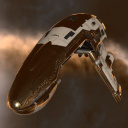
|
Punisher
Standard Frigates Punisher Class
 4 (0/4) 4 (0/4)  2 2  5 5
 67 MW 67 MW  140 tf 140 tf 355 m/sec 355 m/sec 135 m³ 135 m³ |
has an inordinately large capacitor for a T1 frigate. In fact, at 425 GJ without skills, it is larger than its runners up by 75 GJ (the Caldari Merlin and Gallente Tristan at 350 GJ - the Minmatar Rifter only has a 250 GJ capacitor), it is also has more cap than all T2 frigates other than the Retribution (an Amarr Assault Ship), and most of the faction frigates.
It has a utility high slot unuseable for DPS due to the number of turret and lack of missile slots. It lacks a laser damage bonus and accordingly there is no downside to using autocannons. It is particularly well suited to a negligable (DCU) capacitor armour tank due to its inherrent armour resist bonuses, four low slots, and very nice amount of shield and armour HP. Taken together the Punisher is the king of T1 frigate cap warfare platforms.
The classic punisher 'bleeder' solo fit exemplifies how this adds up to excellent casual capacitor warfare use: Template:Fittings But for more serious cap warfare the Punisher can run a small neut for a ridiculously long time with good skills. Removing the cap draw of a repairer and replacing the nos with a neut you can control the cap of any other frigate in the game and accordingly control the fight for a huge duration of 5+ mins depending on skills. Put these together and you get this fit which has the ability to annihilate any other T1 frigate it can catch (rifters beware!): Template:Fittings
Arbitrator
The Arbitrator is a very balanced ship and is a great solo, small gang, or fleet option for Amarr cruiser pilots. It has the complete package of acceptable damage (with good drone skills) and EWAR wrapped up in a decent tank. A flexible slot layout completes the package.
None of these nice capabilities require any of the 4 high slots. Therefore the perfect situation arises for unbonused cap warfare. Generally this is the only applicable mid point ship for someone interested in training up for the Amarr Recons which specialize in cap warfare. It is a good platform for some cheap practice for a pilgrim as the tactics are almost identical. Get close, get point, neut and unleash drone fury. Typically a slight variation of this fit will be used: Template:Fittings
Dominix
The neutdomi has a fiercesome reputation in EVE based on the following:
- Decent capless/ammoless/slotless drone DPS
- Excellent durability, even before rigs
- Lots of neuting power
- Lots of RR power
- Room for MWD, cap booster, point, web, and ECCM
Capacitor Warfare Bonused Ships
And finally we get to the ships truly designed to specialize in and rule the world of cap warfare.
Amarr T2 Ships
Sentinel
Sentinel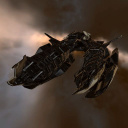
 |
Sentinel
Electronic Attack Frigates Crucifier Class
3 (0/2) 4 3
40 MW 195 tf340 m/sec165 m³ |


RELATED UNI-WIKI REFERENCES
|
S H I P B O N U S E S
Amarr Frigate bonuses (per skill level): Electronic attack ships are mobile, resilient electronic warfare platforms. Although well suited to a variety of situations, they really come into their own in skirmish and fleet encounters, particularly against larger ships. For anyone wanting to decentralize their fleet's electronic countermeasure capabilities and make them immeasurably harder to counter, few things will serve better than a squadron or two of these little vessels. |


Template:Cap Warfare Ship Neuts:
| Meta | Name | Range | Energy Cost | Energy Neuted | Neut Efficiency | Neuting per Sec |
|---|---|---|---|---|---|---|
| 5 | Small Energy Neutralizer II | 18,900m | 33.75 GJ | 108 GJ | 320% | 18.0 GJ/sec |
| 8 | Imperial Navy Small Energy Neutralizer | 22,050m | 33.75 GJ | 108 GJ | 320% | 18.0 GJ/sec |
Nos:
| Meta | Name | Range | Energy Transfered | Nosing per Sec |
|---|---|---|---|---|
| 5 | Small Nosferatu II | 19,800m | 19.2 GJ | 6.4 GJ/sec |
| 8 | Imperial Navy Small Nosferatu | 22,500m | 19.2 GJ | 6.4 GJ/sec |
| 13 | Corpii A-Type Small Nosferatu | 30,642m | 20 GJ | ~6.6 GJ/sec |
Template:Fittings
Template:Fittings
Template:Fittings
Curse
Template:Cap Warfare Ship Neuts:
| Meta | Name | Range | Energy Cost | Energy Neuted | Neut Efficiency | Neuting per Sec |
|---|---|---|---|---|---|---|
| 5 | Medium Energy Neutralizer II | 37,800 m | 112.5 GJ | 360 GJ | 320% | 30 GJ/sec |
| 8 | Imperial Navy Medium Energy Neutralizer | 42,000 m | 112.5 GJ | 360 GJ | 320% | 30 GJ/sec |
Nos:
| Meta | Name | Range | Energy Transfered | Nosing per Sec |
|---|---|---|---|---|
| 5 | Medium Nosferatu II | 37,800 m | 72 GJ | 12 GJ/sec |
| 8 | Imperial Navy Medium Nosferatu | 45,000 m | 72 GJ | 12 GJ/sec |
| 12 | Corpum B-Type Medium Nosferatu | 54,000 m | 66 GJ | 11 GJ/sec |
Template:Fittings
Template:Fittings
Template:Fittings
Pilgrim
Template:Cap Warfare Ship
Template:Fittings